A black heart is floating in the air on a white background.

Why you should limit your arguments to one at a time

Kathleen Maiman • March 22, 2021

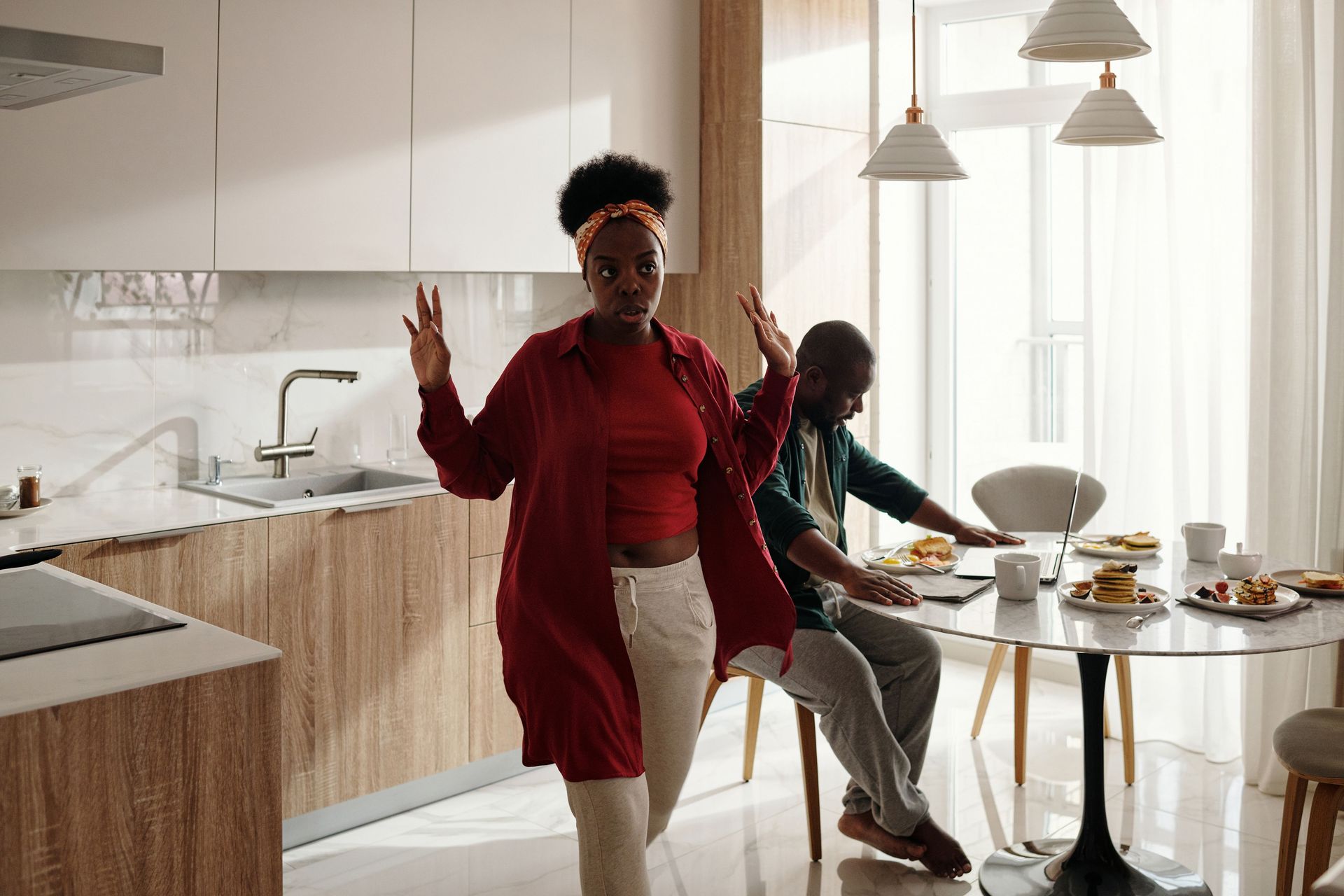
We all are terrible multitaskers. It’s difficult to keep track of more than one topic in a conversation when we’re feeling great. When the brain is under duress, it becomes under-resourced and it’s even more difficult to track multiple topics.

When you find yourself in an argument with your partner and another topic comes up, agree to table it for another time. Resolve the first issue. Take a break. Come back to the second problem when you’re both feeling better.


Now, you may be thinking: that’s easier said than done. How can I possibly ignore a major issue that's affecting me?


The answer? Communication. Let’s explore this in more detail.


What’s the best way to bring up a topic?

When you’re frustrated, it may seem best to just let it out. However, you need to remember that your partner has feelings too. They may be frustrated for their own reasons.


Here’s what I recommend.


Use “I” language when telling your partner about something that is upsetting to you. The automatic brain is constantly looking for cues of danger and will have a negative bias to what is being said. To mitigate this negative bias, start with an appreciation of your partner. 


Tell your partner that you are appreciative of the time they are taking to listen to you. This will lower their defenses and help you be heard. Then proceed, with the one topic, to not overwhelm your partner. 


I noticed I had a reaction to you walking out the door when I was talking with you.” 


Describe their behaviour as if you saw it on a video camera versus saying, “
I feel that you don’t listen to me.” 


This is too vague, non-descriptive, and doesn’t describe their behaviour. It is more like an accusation or blame sentence. 


Then go on to say what you felt. Feeling words are sad, scared, and angry, for example. Many people slip up in this area because of our culture and language. 

We say thoughts when we discuss our feelings. For example, you may say, “
I feel like we are not a team.” 


This is an interpretation, not a feeling statement. It may be better to say, “
I felt sad and anxious when this happened.” 


Sharing what you make up about your partner, the situation, or your relationship describes the internalized negative thoughts. We all make up stuff. We do it all the time. It is most likely a narrative that is not accurate. Telling your partner the personal narrative can clear out the inaccurate story that you made up to the cue. This is a way of opening up and being transparent. 


Just own it. We all make up stuff. 


Why you need to communicate solutions

It’s safe to say you want to get what you desire or request of your partner. This is important. All too often, partners tell their partner how they feel and what they made it mean and leave it to their partner to come up with the solution. In order to get what you want, you need to tell your partner in a kind, loving and clear way what you want. 


If I say to my husband, I would like your support. He would probably leave me alone. That is not what I want. I want a hug because that is what support means to me. Keep it positive, and stay clear away from telling your partner what you don’t want. 


It’s better to go for what you want. They will appreciate your clarity, stance and request. “
I would like you to give me a hug which will tell me that you care about me.


Try this out. Pick one topic and appreciate your partner for listening to you and responding to you. Bring forth a sense of respect, trust, and security by using this method. One thing at a time builds the sense of connection and keeps things manageable. 

Register for our Newsletter and receive a Free Love Chat Package

This Package Includes
  • The 5 Steps to a Better Relationship
  • Ongoing Monthly Relationship Tips
  • If you want more love in your life, our relationship Love Chat Package is an easy cost-free first step.

Click to Register
By Kathleen Maiman April 17, 2026
In Relational Life Therapy , growth is not treated as a finish line. Relationships are living systems, which means they are always changing, always asking for attention, and always inviting us to learn something new about ourselves and each other. The idea that a couple can “arrive” at a permanently easy, conflict-free place is one of the most common myths about love. In reality, healthy relationships are not built on perfection; they are built on ongoing awareness, accountability, and repair. RLT emphasizes directness, personal responsibility, and lasting change rather than the fantasy of getting everything right once and for all. A relationship is not a problem to solve and then file away. It is a practice, and like any meaningful practice, it deepens over time. Partners will keep meeting new versions of each other as life changes, stress rises and falls, and old patterns get triggered in fresh ways. That is why RLT focuses on identifying repeating “dances” between partners, such as pursuing and distancing, criticizing and defending, or over-functioning and under-functioning. These patterns do not disappear because a couple has been together for a long time; they simply become more visible when life places pressure on the bond.
A couple drives on a sunny road, holding hands while the driver steers, with a mountain landscape visible through the glass.
By Kathleen Maiman March 16, 2026
Healthy communication is the foundation of every lasting relationship. Yet many couples find themselves feeling misunderstood or stuck in recurring arguments, not because they lack love, but because they haven’t learned the “rules of engagement” that make conversations effective. At my couples therapy practice in Calgary, I often describe communication as a shared journey: much like driving a car together. When both partners understand the “rules of the road,” they navigate challenges with greater ease, awareness, and respect.
 Ice Skating Reflects the Dance of Lov
By Kathleen Maiman February 18, 2026
There are many highlights with the 2026 Olympics in Milan this winter. One of my favourites is the Ice Dancing Pairs. Watching them pursue the Olympic gold as a couple is breathtaking to watch. They are two people gliding across the ice as if they share one heartbeat. Every lift, every turn, every daring leap relies on
Couple on sofa talking to person in chair, bright room with flowers.
By Kathleen Maiman February 6, 2026
Every February, couples across the world brace themselves for Valentine's Day, sometimes with excitement, sometimes with dread. While the day can invite sweetness and connection, it can also stir up pressure, disappointment, or quiet resentment. As a couple’s therapist, I often see Valentine’s Day magnify whatever is already humming beneath the surface of a relationship: intimacy, disconnection, hope, or longing.
Couple embraces on a cliff with mountainous vista; man kisses woman's forehead, both facing the view, overcast sky.
By Kathleen Maiman January 28, 2026
Ever walk away from a talk feeling more alone? Discover the 3 silent conversation killers—and the simple, heart-centered shifts that turn "fixing" into "feeling."
Man and woman sitting on a gray couch, laughing. Man holding remote, woman with mug. Living room setting.
By Kathleen Maiman December 24, 2025
Every couple has a core conflict dynamic, a recurring emotional negative dance that shapes how fights unfold, no matter the trigger. It's not about who’s factually correct; it’s about the unmet needs humming beneath the words.
Two people holding red mugs with marshmallows in front of a fireplace.
By Kathleen Maiman December 19, 2025
The holidays can bring out the best and the worst in us. Between travel plans, family expectations, and endless to-do lists, even deeply connected couples and individuals can feel stretched thin. While this season promises joy and closeness, it also tests patience, communication, and self-care. Taking it easy—both with yourself and your partner and loved ones —can make all the difference.
Woman scolding man on couch; she gestures at a credit card, he looks down
By Kathleen Maiman November 24, 2025
Money fights aren’t about dollars—they’re about emotions. Learn how couples can turn financial tension into deeper trust and partnership.
Couple wrapped in white blanket, smiling, walking in a garden. Green grass, apple trees in background.
By Kathleen Maiman November 17, 2025
Instead of trying to "fix" your partner or stop fights, shift your focus to growth. Learn how a growth mindset deepens intimacy, builds empathy, and creates lasting change.
Man arranging plants near window; woman leaning on mop in living room.
By Kathleen Maiman October 31, 2025
Helping is often celebrated as the hallmark of compassion. Acts of generosity and care can bond people, ease suffering, and foster trust.