Hurt Feelings: What do we do with them?
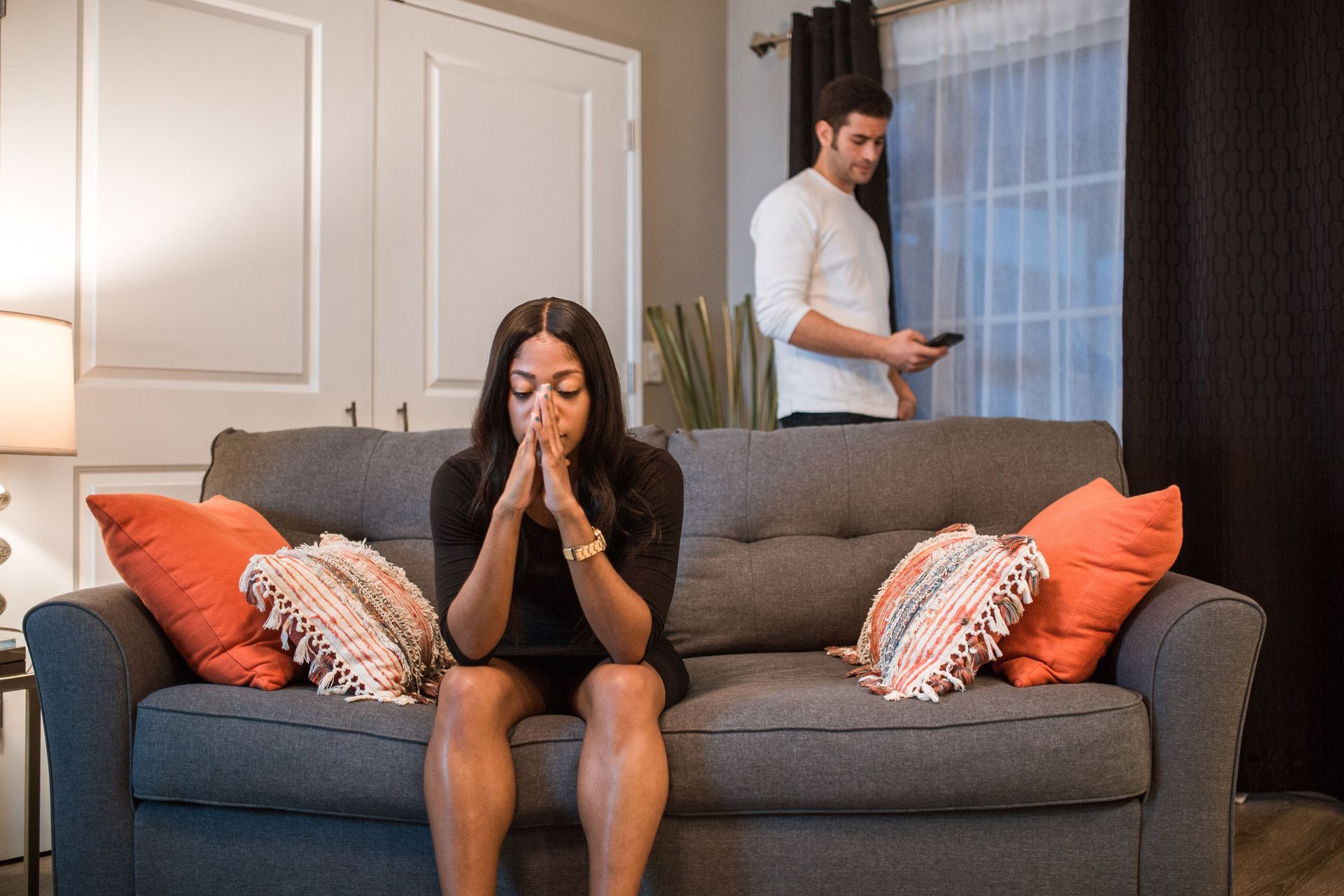
As a couples’ therapist, I will be on the receiving end of a client who comes in with hurt feelings. Many times, the partner makes a complaint about the other partner. This escalates the partner’s defense eg. a tit for tat response. “Well, you also do this to me” Or defensiveness arises: “ I didn’t do anything wrong – that is your perception”.
When we don’t know the full story behind the hurt feelings, and what this triggers in the other, a predictable negative dance spirals and can move those hurt feelings turn into resentment and indifference to the other.

Let’s take this story for example:
The client recounted her experience of having a neck injury, resulting in limited range of motion and pain when running her head.
After her injury, she and her husband had been driving on the freeway and as he was trying to make a last-second lane change, he asked her to check out the passenger side window for cars. She said she felt disregarded because he knew she was in pain, and his request only made it worse.
She called him a name that I won’t repeat here.
“If the roles were reversed, I would have been in the right lane way ahead of time so that I didn’t cause him pain. I was so mad at him,” she told me.
What’s wrong with her complaint?
Not a thing, but what you’re not hearing is her history of feeling like her needs don’t matter and like she is less important than others. As the youngest child from a large family that struggled financially, decisions were always made based on what was best for the larger unit, and her needs were often ignored because the bigger picture was, at times, quite dire. So, she is sensitive to situations where her needs are not acknowledged.
I’m reminded of the quote from William Faulker: “The past isn’t dead. It
isn’t even past.”
Triggers are normal
Here’s the kicker. This is a trigger for her. Triggers are normal, enduring vulnerabilities from moments in our past that escalate interactions in the present. They are normal because we all have them, and while their impact can be managed, they can rarely be eliminated.
Does this mean her husband did something wrong? Nope.
Is she just being overly sensitive? Nope.
It’s just not his trigger, so it didn’t occur to him that it could be an issue.
Further, when we only know what is happening in one person’s subjective reality, it is pretty easy to feel indignant on their behalf. But here’s the reality about subjective realities: all points of view are valid.
From his perspective, he grew up in a hardworking family where people worked through their pain and didn’t complain. His parents coached his sports teams, drove him to hockey at any ungodly hour of the morning, knew the names and phone numbers of all his friends, and taught him that he could be whatever he aspired to be.
They also yelled a lot and demanded what they wanted or needed. So because she had not clearly stated that being upright in a moving vehicle was causing lots of pain for her and that she really needed him to hold her lovingly, it didn’t occur to him that he was asking too much.
Hurt feelings are normal
In the grand scheme of life, this situation feels trivial. So why is it so important for the couple to talk about it? Because when someone’s feelings get hurt in marriage, it doesn’t automatically mean someone did something wrong. It just means feelings got hurt. It’s how couples manage it that matters.
In a perfect world, her husband would have been more careful about his driving and she would have been more clear at the beginning of the drive about her pain. But these things didn’t happen, so her feelings got hurt, then she got contemptuous towards him, and his feelings got hurt.
This is not actually an argument – it’s what we call a regrettable incident. Even the best couples have them. In ourcouples workshops and sessions,
we teach couples how to repair after an interaction like this.
In a secure functioning relationship, I tell couples to “race to repair” and do it often.
They remember their partner’s triggers and they respect them. Having these regrettable incidents doesn’t mean that you are a disaster at relationships or you are not meant to be together. Instead you recognize that each of us are imperfect and we step on each other’s toes and triggers from time to time. What makes a couple successful is that that they are willing to repair after a regrettable incident.
As
Harville Hendrix PhD– author of Getting the Love You Want says, “Conflict is Growth Trying to Happen. It is an opportunity to look deeper behind the reactivity and see what unfinished hurts are rising to the surface. This offers each couple an opportunity to move into a conversation for recovery that includes insight, empathy and validation.
All it would have taken for this couple is for one of them to say, “I can see why your feelings got hurt. I am sorry it happened. Your feelings matter to me.” This is relationship repair that works.
Register for our Newsletter and receive a Free Love Chat Package
- The 5 Steps to a Better Relationship
- Ongoing Monthly Relationship Tips
- If you want more love in your life, our relationship Love Chat Package is an easy cost-free first step.